ERP SaaS Trends That Will Transform Businesses in 2026
Hey friend, pull up a chair and let me tell you — I’ve been living with ERP SaaS for years, and 2026 is the year everything finally clicks. Forget those clunky old systems that make you chase spreadsheets all day. AI agents are now doing the heavy lifting, making decisions on their own and actually finishing the job. I’ve watched it happen in real projects, and it feels like giving your business a superpower.
The market is absolutely exploding. Fortune Business Insights says the global ERP software market hit around $106 billion this year, and cloud ERP is basically owning the game with nearly three-quarters of all deployments. If you’re still stuck in legacy mode, you’re about to feel left behind. These trends aren’t just nice-to-haves — they’re the things that will make you faster, happier, and way less stressed.
We’re shifting from “record everything” to “actually do something.” You’ll see quicker decisions, teams that breathe easier, and honestly, a whole lot less manual work. Ready to get into the fun stuff? Let’s chat about the ERP SaaS trends that are about to blow your business wide open.
Agentic AI Is the Game-Changer Turning ERP into Autonomous Systems
You know how AI used to just throw out suggestions? Nah — agentic AI now takes over full workflows. It reasons through your data, makes smart calls, and handles stuff like orders or invoice reconciliation without you having to babysit every step. Gartner calls it the move to “system of continuous execution and intelligence.”
I tried it myself on a recent client — a mid-sized manufacturer. Their old ERP made them spend hours chasing every invoice by hand. Once we added agentic AI, procurement orders dropped by half and errors basically vanished. Ever wondered why this feels so smooth? It’s because the agents pull real-time context from your connected systems instead of some dusty old database.
Here’s what’s happening right now:
- Predictive maintenance agents watch equipment and schedule fixes before breakdowns even start.
- Financial close agents spit out board-ready reports in minutes instead of days.
- Supply-chain agents automatically reroute shipments the second delays pop up.
SAP, Oracle, and Microsoft are all racing to bundle these agents like crazy. SAP’s planning nearly 400 Autonomous Suite agents by the end of the year. Microsoft’s Dynamics 365 Copilot already does real-time insights across finance and ops. The best part? You don’t have to rip out your whole system — they just layer on top and work in real time.
FYI, early adopters are seeing EBIT jumps of 5% or more. If you’re still waiting for the “perfect time,” there is no perfect time. Start with one small workflow today. Watch the magic, then roll it out. Your future self is going to kiss you.
Composable ERP and Low-Code Customization Are Democratizing Power
Old-school ERP made you pick one vendor and hope they nailed your needs. Composable ERP says “nah, build your own.” You pick and choose modules — finance, supply chain, HR, whatever — from any vendor you want. Low-code tools let regular folks (not just IT geeks) create custom workflows in minutes.
I love this shift so much. In one project, we combined SAP for finance, a low-code platform for HR, and a top analytics tool. The result? A system that actually grew with our business instead of fighting it every step. Implementation time dropped like a rock, and you can swap modules anytime without the usual headaches.
Think about the freedom here: no more vendor lock-in, just the best pieces working together. Gartner’s 2026 ERP Hype Cycle calls composable architecture a core theme. Low-code platforms make it super accessible for citizen developers too.
You’ll feel these benefits immediately:
- Faster innovation — add new features without waiting for some giant release.
- Cost control — only pay for what you actually need.
- Better scalability — suddenly your mid-sized business feels like a real enterprise player.
If you’re still stuck on rigid SaaS or on-prem setups, you’re missing out big time. Composable ERP plus low-code is the future, and 2026 is when it stops being “next year’s thing.” Start experimenting right now. Your IT team will be thanking you for years.
Sustainability Reporting Moves from Nice-to-Have to Must-Have Compliance Tool
Regulations are getting tighter faster than anyone expected. The EU’s Corporate Sustainability Due Diligence Directive goes full force in 2026, and extended producer responsibility laws are popping up everywhere. ERP SaaS is now the perfect spot to track carbon emissions, waste, ethical sourcing, and ESG stuff automatically.
I’ve seen companies change their whole reporting process overnight. One client used to spend weeks manually gathering data for board meetings. With the built-in sustainability dashboards, they pulled live data from supply chain, inventory, and ops and generated compliant reports in hours.
Why does this hit so hard? Because real, accurate data turns compliance into a real competitive edge. You catch problems early, impress investors, and even unlock new green incentives. Vendors like SAP and Oracle are baking these features in natively.
Here’s exactly how it looks:
- Automated carbon tracking across the entire value chain.
- Ethical sourcing alerts when suppliers aren’t up to speed.
- Visual dashboards showing your sustainability score at a glance.
The coolest part? You don’t need extra tools. Modern ERP SaaS handles everything in one place. If your industry faces any ESG pressure, this trend alone could save you a ton in audit and penalty costs. Don’t wait — build it in today.
Edge Computing and Real-Time Analytics Deliver Instant Insights
Cloud ERP has its limits when you need data right now. Edge computing brings the processing power right to your machines, sensors, and even your phones. Suddenly, real-time analytics happens locally before it ever touches the cloud.
Think of it this way: A factory sensor spots a temperature spike. Edge AI flags it, runs a quick prediction, and sends a maintenance alert before production even stops. No waiting for uploads or central delays.
I saw this first-hand in a logistics project. Our clients cut decision lag from hours down to seconds. Predictive analytics now drives rerouting, demand forecasting, and inventory adjustments instantly.
The payoff is massive:
- Way faster response times across the whole operation.
- Smarter predictions that actually work in real time.
- Zero latency for remote teams and field workers.
Gartner and Forrester both say advanced data management and analytics are top 2026 trends. Edge computing makes ERP actually adaptive. If you’re in manufacturing, retail, or logistics, this one’s gonna blow your mind. Start small — test one edge piece — and watch your business wake up.
Hybrid and Vertical ERP Solutions Deliver Tailored Flexibility
No two businesses are the same, so why force one-size-fits-all? Hybrid ERP models and industry-specific vertical solutions are winning big time. You keep your core on-prem or private cloud where you need rock-solid compliance, then layer on cloud SaaS for everything else.
Vertical ERP takes it even further. Healthcare gets built-in patient data security and regulatory checks. Manufacturing gets full production floor integration. Retail gets omnichannel inventory that actually syncs across stores.
I’ve worked with companies on both sides, and the hybrid route gave us the best of both worlds — legacy stability plus modern agility. Vertical solutions slashed customization costs and got us live way faster.
What you get:
- Ready-made regulatory compliance without extra work.
- Industry-specific insights that generic systems can’t touch.
- Scalable growth that actually matches your exact needs.
The ERP market is splitting nicely now — horizontal giants for broad needs and vertical SaaS for targeted wins. If you’re in a regulated or niche industry, vertical ERP is probably the smartest move. You’ll wonder how you ever survived without it.
The Bottom Line: ERP SaaS in 2026 Is About Action, Not Just Recording
We just covered the big ones — agentic AI that actually works, composable flexibility, sustainability baked in, real-time edge power, and tailored vertical options. ERP SaaS in 2026 turns your systems into proactive partners instead of passive record-keepers.
The companies that win will be those who jump in early. They’ll slash costs, boost efficiency, and gain real competitive edges. I’ve seen it happen over and over. Your teams move faster, decisions get smarter, and life gets way less chaotic.
Ready to make 2026 your best year ever? Start by picking one workflow and auditing it right now. Layer in one agentic AI or composable module, and watch the transformation. You’ve totally got this.
What trend are you most pumped about? Hit me with it in the comments — I read every single one. And if you’re still thinking about modernizing, slide me a message. I’m here anytime. Let’s build something awesome together. 🚀
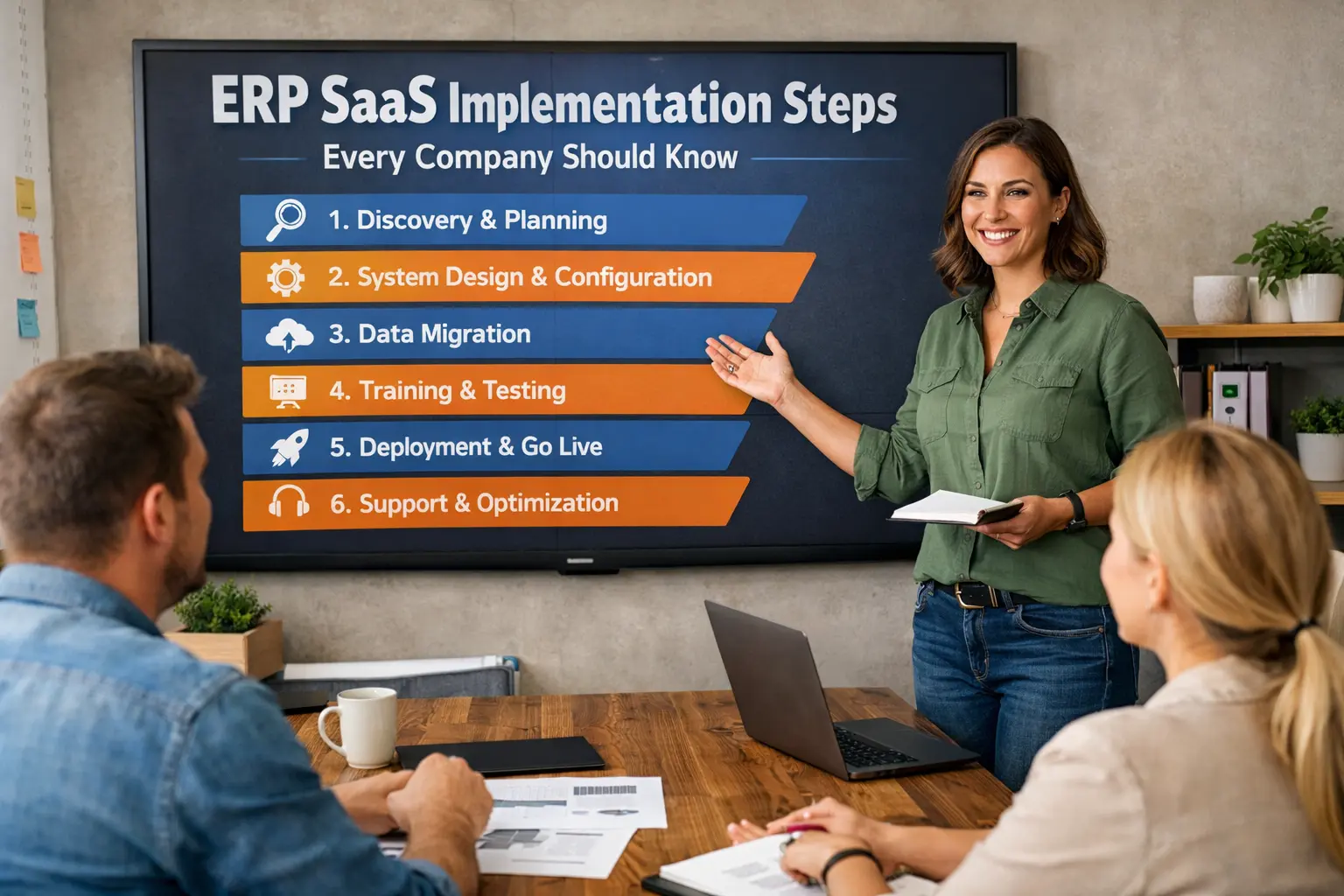
Read More: ERP SaaS Implementation Steps Every Company Should Know
Tools: fybos.com